Music is often cited as a central artistic mode in African theatre and performance practices. However, little attention has been paid to music theatre on the continent in general, and to opera in particular, with the exceptions of a few noted genres, such as Concert Party or the Yorùbá "folk opera" of the 1960s, and the emerging research on opera culture in South Africa. This volume of African Theatre highlights the diversity across the continent from a variety of perspectives - including those of genre, media, and historiography. Above all, it raises questions and encourages debate: What does "opera" mean in African and African diasporic contexts? What are its practices and legacies - colonial, postcolonial and decolonial; what is its relation to the intersectionalities of race and class? How do opera and music theatre reflect, change or obscure social, political and economic realities? How are they connected to educational and cultural institutions, and non-profit organisations? And why is opera contradictorily, at various times, perceived as both "grand" and "elitist, "folk" and "quotidian", "Eurocentric" and "indigenous"? Contributors also address aesthetic transformation processes, the porousness of genre boundaries and the role of space and place, with examples ranging from Egypt to South Africa, from Uganda to West Africa and the USA. The playscript in this volume is We Take Care of Our Own by Zainabu Jallo
This contribution offers a critical engagement with Africapitalism, a concept popularized by Nigerian billionaire Tony Elumelu. It first contextualizes the concept and provides a brief history. It then moves on to discuss four questions that have hitherto received little discussion in the dedicated debate: How does Africapitalism square with other existing visions of Africa's economic future? Exactly what kind of critique of capitalism does Africapitalism offer? What kind of future does Africapitalism imagine, and what roles does it assign to the state, the citizenry and the private sector? How well positioned is the idea of Africapitalism to tackle Africa's most pressing problems?
In cooperation with ARTE, the European culture channel, the Cluster of Excellence showed different documentary films. As part of the film series Afrikaleidoskop these events took place at the Kulturhaus Neuneinhalb. Each screening is followed by a discussion between the filmmakers and scholars of the Cluster.
For the third time, an event as part of the series "AfriKaleidoskop meets ARTE" took place on March 20th 2024. The Africa Multiple Cluster of Excellence at the University of Bayreuth, in collaboration with the cultural broadcaster ARTE, invited the interested public to a presentation of the documentary "Senegal: From Paris to Dakar" followed by a discussion at the Kulturhaus Neuneinhalb in Bayreuth.
Dr Lamine Doumbia, research associate at the Institute for Asian and African Studies at Humboldt University in Berlin, and Dr Ibrahima Sene, research associate at the Chair of History with a focus on African history at UBT, were available for the subsequent discussion.
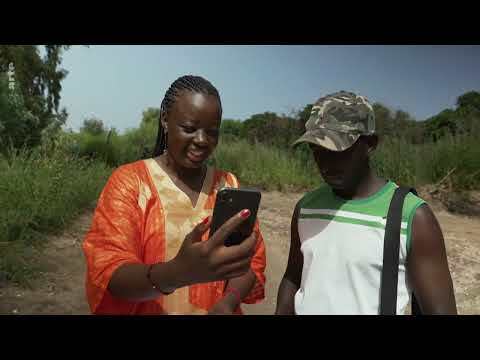
Senegal: From Paris to Dakar - a report by Jean Yves Cauchard, Gaspard Baudry, Sylvain Kasper and Valentin Barrault (24 min.)
Six years ago, Ibrahima Sylla, a former cab driver from Paris, founded "Salam Transport", a private bus company that connects Dakar with many cities. Today it is the number 1 in Senegal. Coumba Sow had a good job as a manager in a French bank, but she took a year off to set up "PariSénégal", an agency with which she helps Senegalese French people return to their homeland.
Bakary Coly was employed by the French state financial institution Caisse des Dépôts for 15 years. He founded a start-up in Senegal for delivery services with electric motorcycles.
Between 2014 and 2019, Senegal recorded a growth rate of 6%, which is interesting for entrepreneurs with good ideas. The pandemic in Europe has also spurred many relocation plans to Africa. The French-Senegalese youth in France and Europe see these opportunities in their parents' homeland. Unlike many young people in Senegal, who are prepared to put their lives on the line for their dream of Europe.