

Publications
Origins & context
- Title
- Publications
Loading…
Loading…
Items
NISQ-Ready Community Detection Based on Separation-Node Identification
The analysis of network structure is essential to many scientific areas ranging from biology to sociology. As the computational task of clustering these networks into partitions, i.e., solving the community detection problem, is generally NP-hard, heuristic solutions are indispensable. The exploration of expedient heuristics has led to the development of particularly promising approaches in the emerging technology of quantum computing. Motivated by the substantial hardware demands for all established quantum community detection approaches, we introduce a novel QUBO-based approach that only needs number-of-nodes qubits and is represented by a QUBO matrix as sparse as the input graph’s adjacency matrix. The substantial improvement in the sparsity of the QUBO matrix, which is typically very dense in related work, is achieved through the novel concept of separation nodes. Instead of assigning every node to a community directly, this approach relies on the identification of a separation-node set, which, upon its removal from the graph, yields a set of connected components, representing the core components of the communities. Employing a greedy heuristic to assign the nodes from the separation-node sets to the identified community cores, subsequent experimental results yield a proof of concept by achieving an up to 95 optimal solution quality on three established real-world benchmark datasets. This work hence displays a promising approach to NISQ-ready quantum community detection, catalyzing the application of quantum computers for the network structure analysis of large-scale, real-world problem instances.
O que é bom? Memórias de uma geração com cheiro de café
Na Colômbia, mais de 6 milhões de pessoas foram obrigadas a abandonar suas terras por causa dos diferentes tipos de violência gerados por grupos ilegais. Deste trauma colectivo nasceu a obra de videoarte "Memórias de uma geração com cheiro a café" (https://www.youtube.com/watch?v=j8mhza49Mv4) dirigida pela bailarina e coreógrafa colombiana Carolina Beleño Garcia em colaboração com o músico e compositor moçambicano Matchume Zango. Com o lançamento da obra de videoarte, os organizadores desta mesa pretendem promover um debate sobre a situação sócio-política em que a própria obra se insere e, da mesma forma, refletir sobre as linguagens artísticas que a ressignificam. Com isso, abordam o papel decisivo da arte na investigação das feridas da comunidade, dos pesadelos coletivos e das possibilidades de revalorização das relações humanas em um contexto de violência tanto somática quanto estrutural. Os palestrantes são membros da rede DjumbaiALA (www.djumbaiala.com) que tem como objetivo promover diálogos transdisciplinares entre artistas, acadêmicos e ativistas da América Latina e África. A obra de videoarte que será apresentada e discutida nesta mesa é uma memória que se tornou má memória de uma das tantas famílias que deixaram para trás tudo o que outrora construíram com o suor. Mães que deixaram os corpos de seus filhos caídos no chão e muitos outros enfrentando o sofrimento do recrutamento forçado. Esta situação que se mantém há décadas é expressa no poema ¿Qué es lo bueno? a partir do qual se desenrola a composição musical e a dança coreográfica. O vídeo é uma reflexão ética e estética sobre a violência, o medo e os silêncios, mas também sobre o consolo, a esperança e as possibilidades de cura. As melodias são traduzidas em movimentos corporais que exorcizam fantasmas do passado que são repassados às próximas gerações, graças às noites sem dormir e às discussões políticas, sociais e culturais que são geradas nas conversas dos avós, seus filhos e netos. Esta é uma história que não tem fim, mas termina com um novo começo. Desta forma, a obra “Memórias de uma geração com cheiro de café” representa a principal missão da DjumbaiALA: criar espaços virtuais e presenciais que permitam conectar, compartilhar e trocar histórias de comunidades que vêm de diferentes lugares mas com passados e processos partilhados, que lutam, trabalham e (re) criam para gerar mudanças culturais, sociais e políticas e assim poder (re) imaginar novos começos para além dos mares, fronteiras e restrições. Nesse sentido, o trabalho é fruto de um intercâmbio transatlântico entre artistas, pesquisadores e líderes sociais que se estabeleceu durante a pandemia e demonstra possibilidades inspiradoras de cocriação de conhecimento artístico e acadêmico com base no princípio da reciprocidade e da aprendizagem mútua.
Of Worlds and Artworks : A Relational View on Artistic Practices from Africa and the Diaspora
The edited volume Of Worlds and Artworks: A Relational View on Artistic Practices from Africa and the Diaspora, part of the Africa Multiple series (Volume 3), offers an interdisciplinary exploration of artistic creation across a spectrum of media, including literature, visual arts, film, and performance. Edited by Ute Fendler, Marie-Anne Kohl, Gilbert Shang Ndi, Christopher Joseph Odhiambo, and Clarissa Vierke, the book investigates how artistic practices engage in “worlding” processes. It emphasises the movement, interaction, and creation of relations that transcend geographic boundaries. The main objective of this book is to challenge the conventional fixed perceptions often associated with area studies, particularly those related to Africa, and instead present it as a flexible and interconnected space influenced by various global interactions. This relational approach not only establishes connections within Africa but also with other regions such as the Indian Ocean, the Atlantic, and Europe.
Organizing Online Events
This is a compilation of over 100 slides which were presented in different block courses on Organizing Online Events that were attended by colleagues and members of The Africa Multiple Cluster of Excellence at the University of Bayreuth. Each of them was tailored for different events and attendees – from new student assistants to professors of partner institutions. We used Zoom Meetings and Zoom Webinars, but also administrative platforms and OBS and Restream for streaming onto other platforms. Most courses were structured into eight modules, comprising Basics, Installation of Zoom Webinars/Meetings, Recording, Streaming, Mixed Formats, (internal) Administrative Tasks, Problem Management, and After the Event. Some modules are designed for beginners, some for experienced colleagues.
Ọ̀rúnmìliàn Film-Philosophy : An African Philosophy through Cinematic Storytelling
This paper develops a film-philosophy, (which I call “Ọ̀rúnmìliàn film-philosophy”), by exploring and analyzing the praxis of Ọ̀rúnmìlà oral philosophy and narrative aesthetics in an African cinematic storytelling. It defends a modest thesis by using Saworoide (dir. Túndé Kèlání’s, 1999) as an example of how the African/Nigerian filmmakers are influenced by their inherited oral philosophical traditions. It argues that the condition of philosophy that gives “presence to non-presence” (so that the living can dialogue with the dead) and “knowledge to the unknown” (in order to heal and to re-moralize the living) is central to the Ọ̀rúnmìliàn film-philosophy. The central argument is based on what I call the Ọ̀rúnmìlà “parable of Eégún” (masquerade); and the film-philosophy finds some philosophical similarities in Stanley Cavell’s The World Viewed on the one hand, and Christopher Falzon’s concept of cinema as philosophy, (which is based on Plato’s parable of the cave), on the other. The paper therefore stresses the intercultural correlation between an African film-Philosophy and the modern European/western traditions of film-philosophy. It contributes to film and philosophy scholarship by exploring the manifestations of Yorùbá/Ọ̀rúnmìlà philosophical texts in the contemporary Nigerian film as case study of how contemporary African filmmakers, like their oral artiste counterparts, continue to articulate their inherited traditions via cinematic storytelling.
Other Worlds : The “Prophet’s Ascension” as World Literature and its Adaptation in Swahili-speaking East Africa
World literature as a study beyond paradigms of national literature is a seemingly open project inviting to study any transnational or transcontinental circulation of texts. So far, however, in many studies, circulation has largely been measured by a text’s contribution to the Western literary reservoir. In this contribution, my aim is to broaden the view on world literature by leaving the West as point of temporal, spatial or intertextual reference. I will open up another perspective on the circulation of texts across space, time and languages in a “world” outside of the West. More specifically, I will take the example of a ramified Islamic text, the so-called micrāj, the story of how the Prophet Muhammad travelled the heavens in one night. After outlining its broad circulation, I will follow the story of the Prophet’s ascension to the Swahili-speaking coast of East Africa at the shore of the Indian Ocean. By reversing the perspective and focusing on the “small” Swahili literature, into which the Islamic narrative becomes adapted, my contribution does not only study different adaptations, but also questions the novelty and uniqueness of transnational and -continental circulation, often celebrated as a product of Western modern times and its new outlook on both the nation and the world.
Participatory Action Research : (Re)connecting Afro-diasporic Communities in Colombia and Brazil
Funded by the Cluster of Excellence, Valerie Gruber and Gilbert Shang Ndi launched a transnational and transdisciplinary research and art exchange program between Germany, Colombia and Brazil, leading to unique ways of knowledge production.
Participatory Action Research : The Persistence of Utopias
To stimulate social change beyond the academic field, Participatory Action Research (PAR) integrates local communities into a collaborative knowledge production. This emancipatory research methodology developed by Colombian sociologist Orlando Fals Borda and other Latin American thinkers aims at minimizing power hierarchies between the researchers and the researched, while overcoming rigid distinctions between theory, methodology and practice. During the workshop, we will share hands-on experience in adopting the PAR approach with Afro-descendant and indigenous communities in Colombia, and discuss its applicability in Africa and beyond. In an interactive setting, we will address the following questions: Why is the subject-object relation problematic in PAR? How is knowledge produced in PAR (under which conditions and in which contexts)? How can we promote a dialogue of academic and popular knowledges? What are the differences between PAR and militant research? What are the gnoseological bases of PAR? Which strategies are used to carry out a systematic return of knowledge to the communities? We will also discuss how to ensure that the committed research process meets academic quality requirements of reflexive knowledge production. In this way, the participants will gain theoretical and practical skills enabling them to apply the PAR approach in their own research projects.
Participatory Action Research in Afro-Latin America : a methodology to imagine and build a life in dignity
Participatory approaches to knowledge production address an urgent need in African and African Diaspora studies: they are laboratories to imagine and develop research practices targeted at overcoming social, racial and gendered hierarchies. Based on two years of doing Participatory Action Research (PAR) with Afro-descendant communities from Brazil and Colombia, we will present diverse methods of knowledge co-creation carried out both online and on-site. Thereby, artistic forms of expression such as music, dance and poetry are used as a common language to imagine life in dignity and identify strategies to achieve this vision. Accompanied by an online mentoring process, our PAR group produced several video performances during the pandemic and published them on the DjumbaiALA YouTube channel (https://www.youtube.com/@djumbaiala). In 2022, we realized the actual exchange program in Cartagena (Colombia) and Salvador da Bahia (Brazil), bringing together young artists and community actors from both countries. We found that the imagination of alternative futures is only possible if hierarchies in formal education, gender, race or class do not inhibit an open exchange of ideas and concepts. This requires a high level of empathy and constant dialogue, taking advantage of methodologies stemming from social arts and arts education. Reflecting on these experiences sheds light on diverse possibilities to co-create academic and artistic knowledges as well as the potentials and limitations of transdisciplinary online and on-site collaboration. This aims at inspiring researchers and professionals who intend to ground their work with Black communities on reciprocity and mutual learning, while boosting creativity, equality and decoloniality.
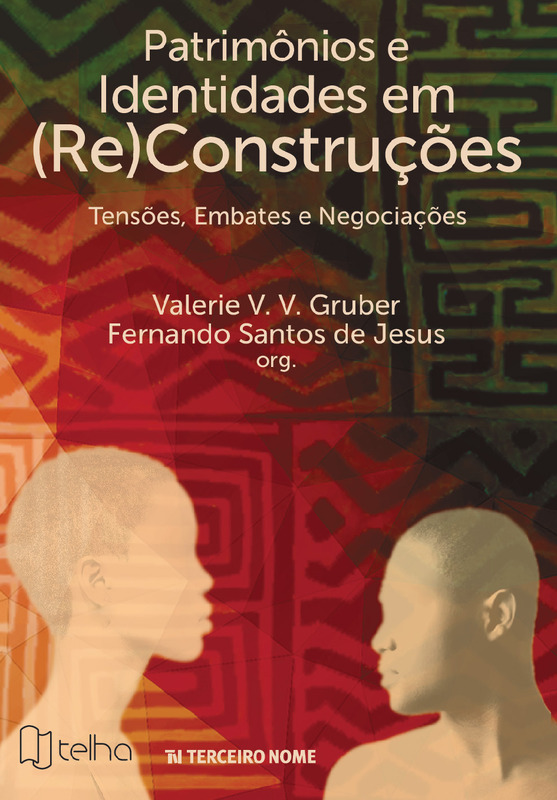
Patrimônios e Identidades em (Re)Construções : Tensões, Embates e Negociações
In Zeiten von Spannungen, Veränderungen und Umbrüchen verdeutlicht dieses Werk, wie wichtig eine eingehende Beschäftigung mit Fragen der Identität und des kulturellen Erbes in Lateinamerika und Afrika ist. Die innovativen theoretischen Überlegungen der insgesamt 16 Autor*innen werden durch empirische Erkenntnisse aus Brasilien, Kolumbien, Südafrika, Angola und Kap Verde fundiert. Im ersten Teil des interdisziplinären Sammelbands wird die Pluralität von Identitätsbildungsprozessen in verschiedenen Kontexten erörtert, die von Forschung und Bildung bis hin zu Musik und Religion reichen. Der zweite Abschnitt beleuchtet Narrative, Erinnerungen und soziale Praktiken von Individuen und Gruppen, die in ihren Gesellschaften unsichtbar gemacht werden. Hierzu zählen afrobrasilianische Intellektuelle ebenso wie Bewohner*innen benachteiligter Nachbarschaften. Im dritten Teil liegt der Fokus auf politisch-ökonomischen, sozialen und technologischen Initiativen, die einerseits auf Innovationen und andererseits auf die Bewahrung des Natur- und Kulturerbes auf beiden Seiten des Atlantiks abzielen. Diese Anthologie ist das Resultat von kritischen Diskussionen, Reflexionen und der Eigeninitiative von engagierten Nachwuchswissenschaftler*innen, die im März 2017 am XVIII. Internationalen Forschungsseminar “Fábrica de Ideias: Patrimônio, Desigualdade e Políticas Culturais” in São Luís do Maranhão (Brasilien) teilgenommen haben. Inmitten der UN-Dekade für Menschen afrikanischer Herkunft (2015-2024) decken sie Ungleichheiten in Zusammenhang mit Erinnerungskulturen, Identitätskonstruktionen und politischen Aushandlungsprozessen auf. Durch eine Balance aus kritischen Analysen und konstruktiven Denkanstößen liefern sie mit diesem Werk einen grundlegenden Beitrag zu zeitgenössischen Debatten in den Kultur- und Sozialwissenschaften.
Planetary Futures : On Life in Critical Times
Based upon the opening keynote address at the German Congress of Geography held in Frankfurt am Main in 2023, this article traces the current debate on the planetary in the humanities, social sciences and Earth System Science in three parts. Instead of taking the concept of the planetary for granted, we explore the question of how it is reflected in our respective fields of research (cultural geography, social geography, and economic geography) and what potential it harbors for unearthing new insights. In particular, we consider the possibilities for a planetarily‐oriented cultural geography beyond anthropocentrism, a social geography of housing that focuses on the concept of planetary habitability, and an economic geography that centers the transhistorical and trans‐geographical impact of plantation logics. From our point of view, the planetary is not simply an additional scale but rather a style of thought that increasingly characterizes our present. Since natural and social science approaches meet here in a new way, it seems particularly relevant to ask how we as geographers might allow ourselves to be intrigued and unsettled by the planetary.